What Is Artificial Intelligence (AI)? Complete Guide to Types, Uses & Future
Artificial Intelligence (AI) is transforming how we live, work, and interact with technology. From chatbots to automation systems, AI is now a core part of modern innovation. This complete guide explains what AI is, how it works, its types, real-world uses, benefits, challenges, and future impact.
What Is Artificial Intelligence? (Quick Answer)
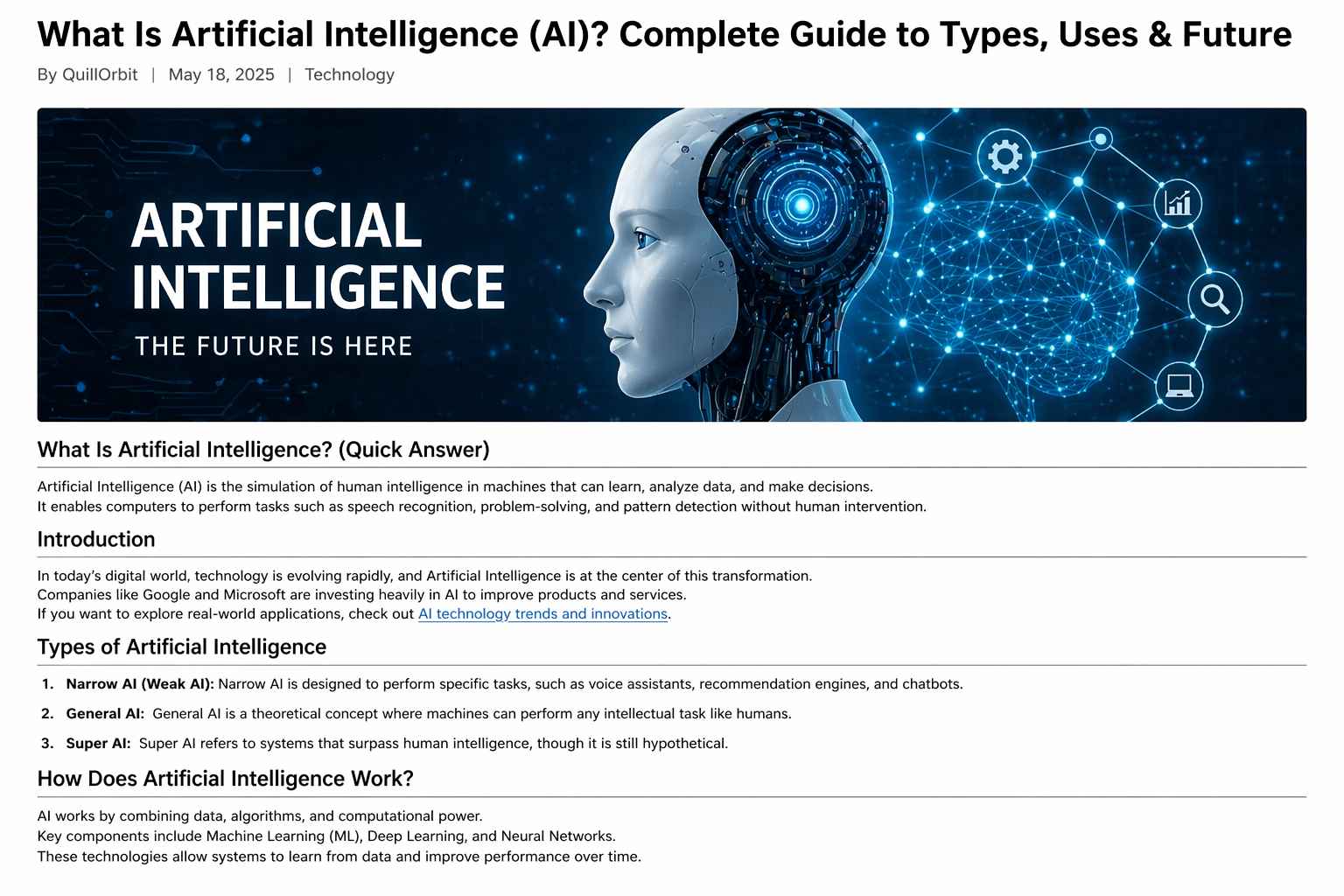
Artificial Intelligence (AI) is the simulation of human intelligence in machines that can learn, analyze data, and make decisions. It enables computers to perform tasks such as speech recognition, problem-solving, and pattern detection without human intervention.
Introduction
In today’s digital world, technology is evolving rapidly, and Artificial Intelligence is at the center of this transformation. Companies like Google and Microsoft are investing heavily in AI to improve products and services.
If you want to explore real-world applications, check out AI technology trends and innovations (internal link).
Types of Artificial Intelligence
Narrow AI (Weak AI)
Narrow AI is designed to perform specific tasks, such as voice assistants, recommendation engines, and chatbots.
General AI
General AI is a theoretical concept where machines can perform any intellectual task like humans.
Super AI
Super AI refers to systems that surpass human intelligence, though it is still hypothetical.
How Does Artificial Intelligence Work?
AI works by combining data, algorithms, and computational power.
Key Components
- Machine Learning (ML)
- Deep Learning
- Neural Networks
These technologies allow systems to learn from data and improve performance over time.
Real-World Applications of AI
Artificial Intelligence is used across many industries:
Healthcare
- Disease detection
- Medical imaging
Finance
- Fraud detection
- Risk analysis
Retail
- Personalized recommendations
- Customer insights
Technology
- Chatbots
- Automation systems
Learn more about automation in AI-powered robotic systems (internal link).
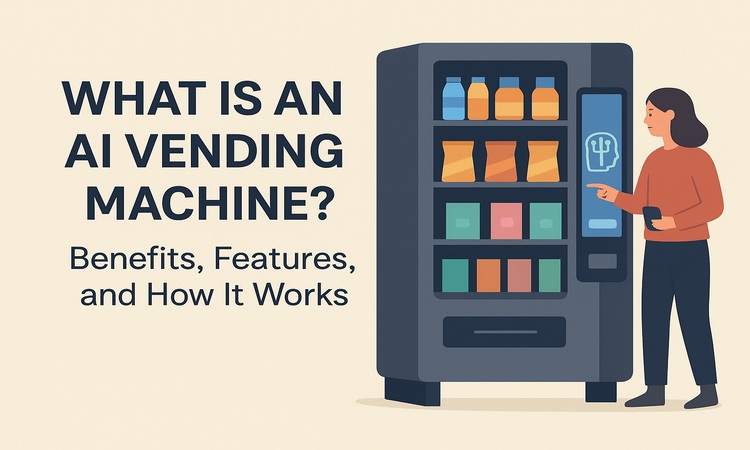
AI is also driving innovation in AI vending machines and automation technology (internal link).
Benefits of Artificial Intelligence
- Increased efficiency
- Automation of repetitive tasks
- Better decision-making
- Cost reduction
Challenges of Artificial Intelligence
- Job displacement concerns
- Data privacy issues
- High implementation costs
- Ethical concerns
- Bias in AI systems
What Is AI Bias?
AI bias occurs when an AI system produces unfair or inaccurate results due to biased training data. Since AI learns from data, it can reflect human biases present in that data.
Why It Matters
- Can lead to unfair decisions
- Affects hiring, finance, and law enforcement
- Reduces trust in AI systems
To understand security risks, read cybersecurity tips to prevent malware (internal link).
Ethical AI: Why It Matters
Ethical AI refers to developing artificial intelligence systems that are fair, transparent, and accountable. It ensures that AI technologies benefit society without causing harm.
Key Principles
- Fairness
- Transparency
- Accountability
- Privacy protection
What Is Generative AI?
Generative AI is a type of artificial intelligence that can create new content such as text, images, videos, and code. Instead of just analyzing data, it generates original outputs based on patterns it has learned.
Popular examples include ChatGPT and Midjourney.
How Generative AI Works
- Trained on large datasets
- Uses deep learning models
- Generates new outputs based on learned patterns
Use Cases
- Content writing
- Image generation
- Code generation
- Marketing automation
Generative AI is rapidly transforming industries like media, design, education, and software development.
Future of Artificial Intelligence
AI is expected to grow rapidly in the coming years.
Key Trends
- AI in everyday devices
- Autonomous systems
- AI in cybersecurity
- Advanced automation
- Growth of generative AI
- AI agents and autonomous task execution
Explore future developments in latest AI technology trends (internal link).
AI is also influencing global industries like supply chains—see why Apple is moving iPhone production to India (internal link).
AI Agents: The Next Big Trend
AI agents are advanced systems that can not only respond to queries but also perform tasks automatically. Unlike traditional AI tools, they can plan, make decisions, and execute actions with minimal human input.
Examples include tools like Auto-GPT and advanced versions of ChatGPT.
What Makes AI Agents Different
- Perform multi-step tasks
- Operate autonomously
- Interact with multiple tools
Use Cases
- Workflow automation
- Email and task management
- Data analysis
- Customer support automation
AI in Daily Life
AI is already part of everyday life:
- Smartphones
- Online shopping
- Social media algorithms
People Also Ask
What is artificial intelligence in simple words?
AI is technology that allows machines to think, learn, and make decisions like humans.
How does AI work?
AI uses data and algorithms to learn patterns and improve performance over time.
What are examples of AI?
Chatbots, voice assistants, and recommendation systems are common examples.
Is AI dangerous?
AI has risks, but proper regulation and ethical use can minimize them.
FAQ
What is the main goal of AI?
To create systems that can perform human-like tasks efficiently.
Where is AI used most?
Healthcare, finance, and technology industries.
Is AI the future?
Yes, AI is expected to play a major role in future innovation.
Related Articles
- AI-powered robotic systems
- AI vending machines and automation technology
- Cybersecurity tips to prevent malware
Conclusion
Artificial Intelligence is no longer a futuristic concept—it is already shaping the present. From automation to decision-making, AI is transforming industries and improving efficiency worldwide. To explore more, you can also read how to fix slow computer performance issues.