What Is Deep Learning? Complete Beginner’s Guide (How It Works, Examples, Uses & Future)
Deep learning is one of the most advanced and powerful technologies in artificial intelligence. It enables machines to process complex data such as images, speech, and text with remarkable accuracy, making it the backbone of modern AI systems.
In this complete guide, you’ll learn what deep learning is, how it works, its key components, real-world applications, benefits, challenges, and future trends—explained in a simple and beginner-friendly way.
What Is Deep Learning? (Quick Answer)
Deep learning is a subset of machine learning that uses multi-layered neural networks to learn patterns from large datasets and make intelligent decisions automatically.
Introduction
Over the past decade, deep learning has transformed how machines interact with the world. From unlocking your phone using facial recognition to enabling self-driving cars, deep learning plays a critical role in many modern technologies.
Companies like Google and Tesla use deep learning to build intelligent systems that can analyze massive amounts of data and improve over time.
Understanding Deep Learning in Simple Terms
To understand deep learning, think of how humans learn to recognize objects.
For example, when a child learns to identify a dog:
- First, they notice shapes
- Then features like ears and tail
- Finally, they recognize the whole animal
Deep learning works in a similar way. It processes data in layers, where each layer learns increasingly complex features.
How Hidden Layers Actually Work
The real power of deep learning comes from its hidden layers. Each layer learns a different level of abstraction.
For example in image recognition:
- First layer detects edges and lines
- Second layer identifies shapes like circles or squares
- Deeper layers recognize patterns like eyes and textures
- Final layer identifies the complete object
How Deep Learning Works (Step-by-Step)
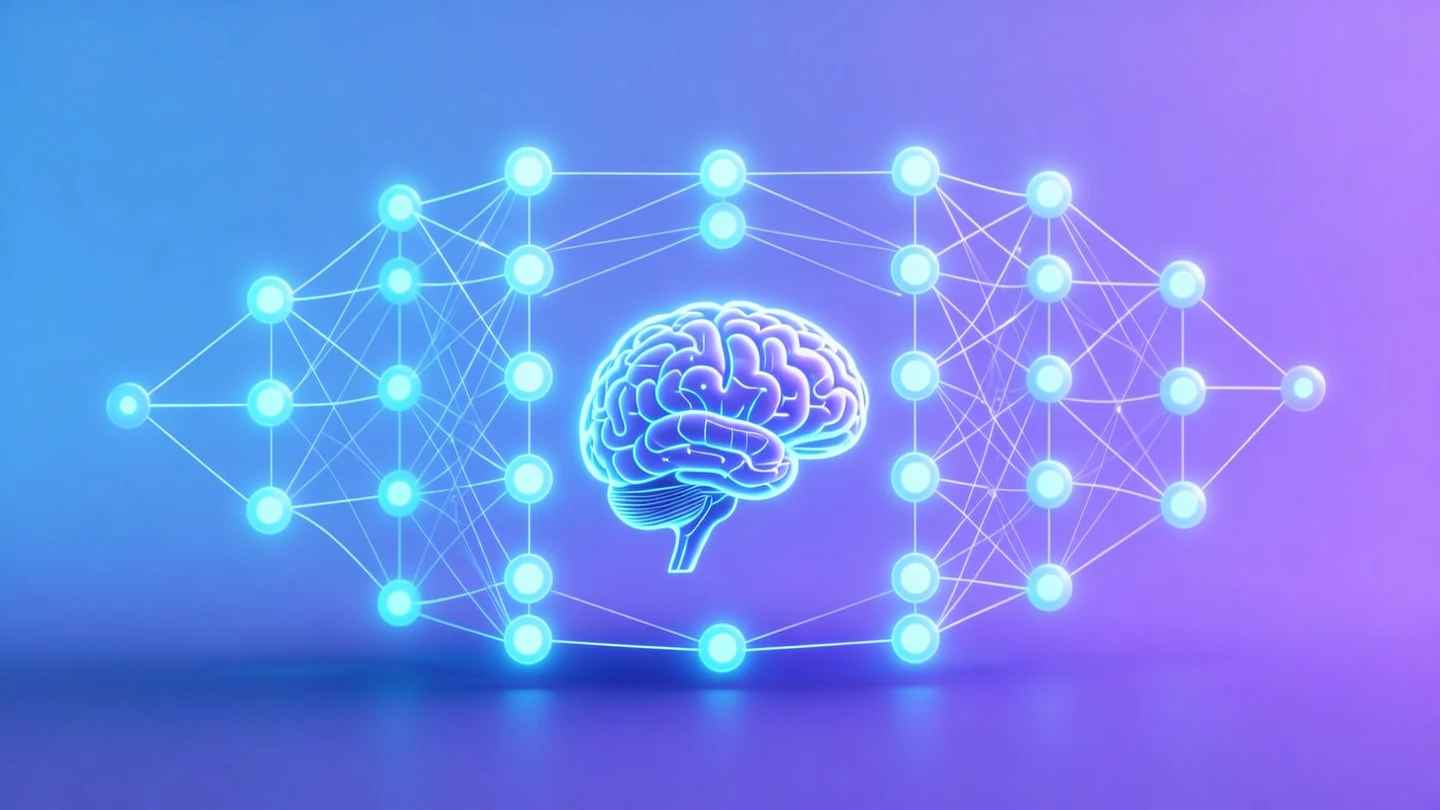
Deep learning models are built using artificial neural networks inspired by the human brain.
Step 1: Input Data
The system receives raw data such as images, text, or audio.
Step 2: Processing Through Layers
Data passes through multiple layers where each layer extracts more meaningful features.
Step 3: Output Prediction
The final layer produces a result such as classification or prediction.
Structure of a Neural Network
A neural network consists of three main parts:
- Input Layer – Receives data
- Hidden Layers – Process and transform data
- Output Layer – Generates final result
The depth (number of hidden layers) defines the power of the model.
Deep Learning vs Machine Learning (Human Effort Explained)
Machine Learning requires humans to define what features are important (feature engineering).
Deep Learning automatically discovers what matters in the data.
This is why deep learning is more powerful but also more resource-intensive.
Real-World Applications of Deep Learning
Deep learning is widely used across industries:
- Image Recognition – Facial recognition systems
- Voice Assistants – Speech recognition
- Healthcare – Disease detection
- Autonomous Vehicles – Self-driving systems
- Natural Language Processing – Chatbots and translation
Generative AI
Modern tools like ChatGPT use deep learning to generate text, images, and code.
Benefits of Deep Learning
Deep learning enables machines to solve highly complex problems efficiently.
Exceptional Accuracy
Deep learning achieves high accuracy in tasks like image and speech recognition.
Automatic Feature Extraction
The system automatically identifies important patterns without human effort.
Handles Unstructured Data
Works effectively with images, audio, video, and text.
Scalability
Performance improves with more data. Companies like Google leverage this advantage.
Continuous Improvement
Models improve as they process more data.
Powering Advanced Technologies
Used in AI chatbots, self-driving cars, and smart assistants.
Challenges of Deep Learning
Requirement of Large Data
Needs massive datasets to perform well.
High Computational Cost
Requires GPUs and TPUs developed by Google.
Black Box Problem
Difficult to understand how decisions are made.
Overfitting
Performs well on training data but not always on new data.
Long Training Time
Training can take hours or days.
Data Quality Issues
Poor data leads to poor results.
Ethical Risks
Deep learning can create deepfakes, raising concerns about misinformation.
Future of Deep Learning
Deep learning is rapidly evolving and shaping the future:
- Real-time AI systems
- Autonomous machines
- Generative AI
- AI automation
People Also Ask
What is deep learning in simple words?
It is a method where machines learn patterns using neural networks.
Where is deep learning used?
Used in healthcare, AI tools, and self-driving systems.
Is deep learning difficult?
Basic concepts are easy, advanced models require expertise.
FAQ
Is deep learning part of AI?
Yes, it is a subset of machine learning.
Why is deep learning important?
It helps machines process complex data efficiently.
Can deep learning replace humans?
It automates tasks but cannot fully replace human intelligence.
Conclusion
Deep learning is one of the most powerful technologies in artificial intelligence. It enables machines to learn complex patterns and make intelligent decisions, transforming industries worldwide.
As technology evolves, deep learning will continue to play a major role in shaping the future of AI.